Anchor Alignment Aid
Underwater LED device that tells dock workers when a mooring anchor block is back in exactly the right spot.
Overview
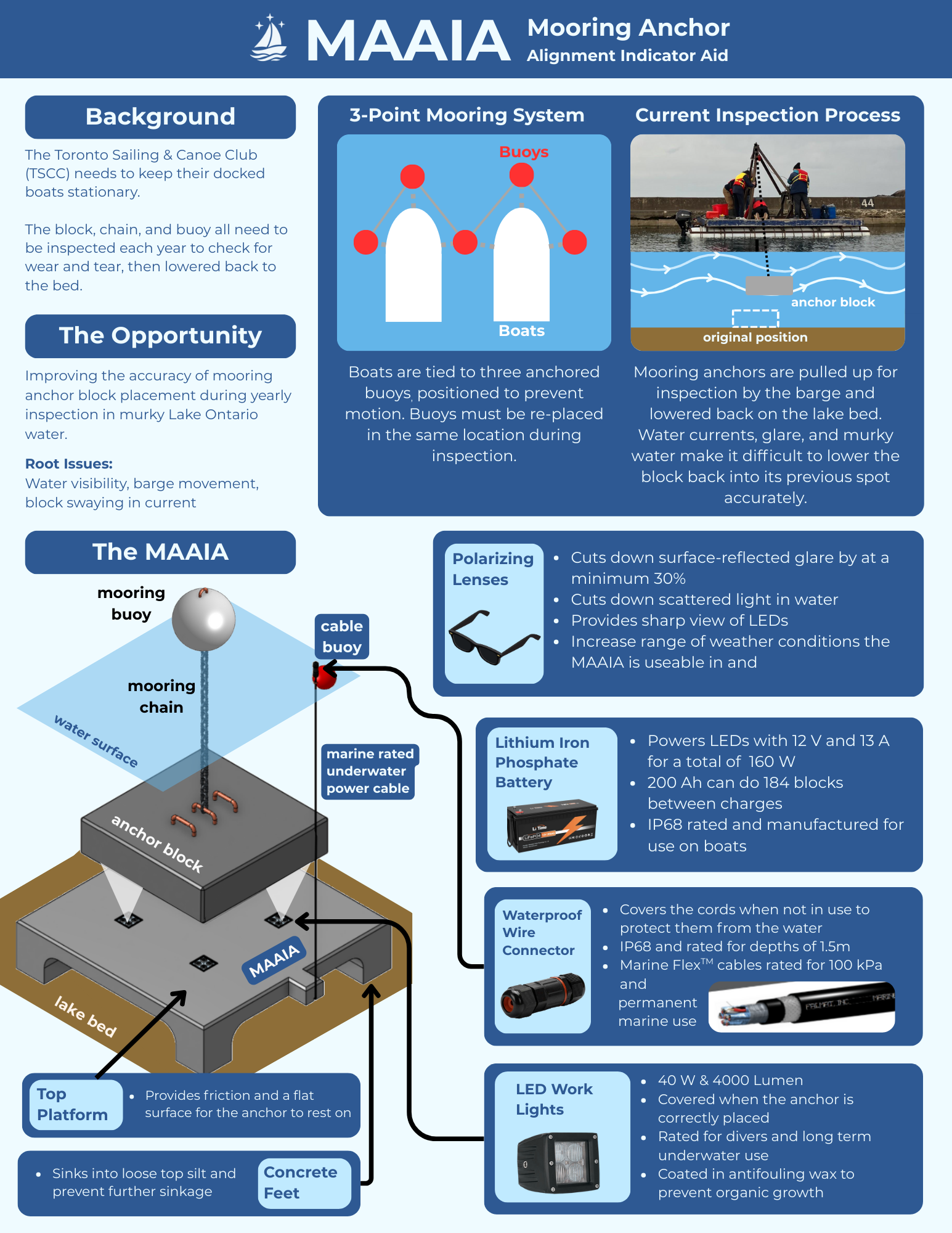
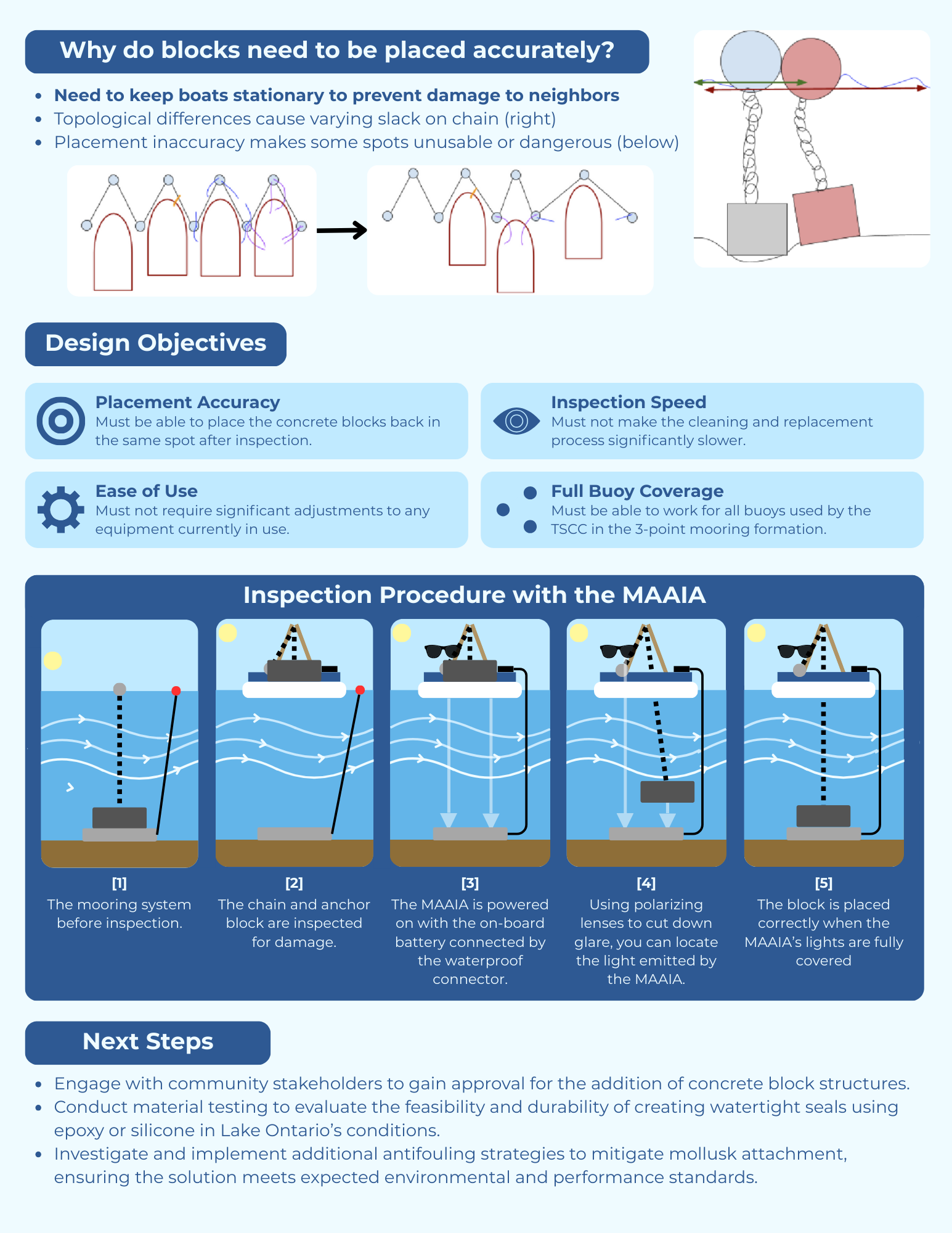
Every year, the Toronto Sailing & Canoe Club has to pull up their mooring anchor blocks from Lake Ontario for inspection, then lower them back down to the exact same spot. The problem? Lake Ontario is murky, currents push the block around on the way down, and surface glare makes it nearly impossible to see what's happening underwater. Miss the spot, and boats don't stay stationary, which means damage to neighboring boats.
This was our first-year engineering design project for ESC102, and our client was the TSCC. We spent time understanding the actual inspection workflow: a barge lowers the block, workers try to guide it back into position, water visibility and current make accuracy nearly impossible. The root issues were clear: murky water, barge movement, glare, and a block that sways in the current on the way down. No existing tool addressed all of these at once.
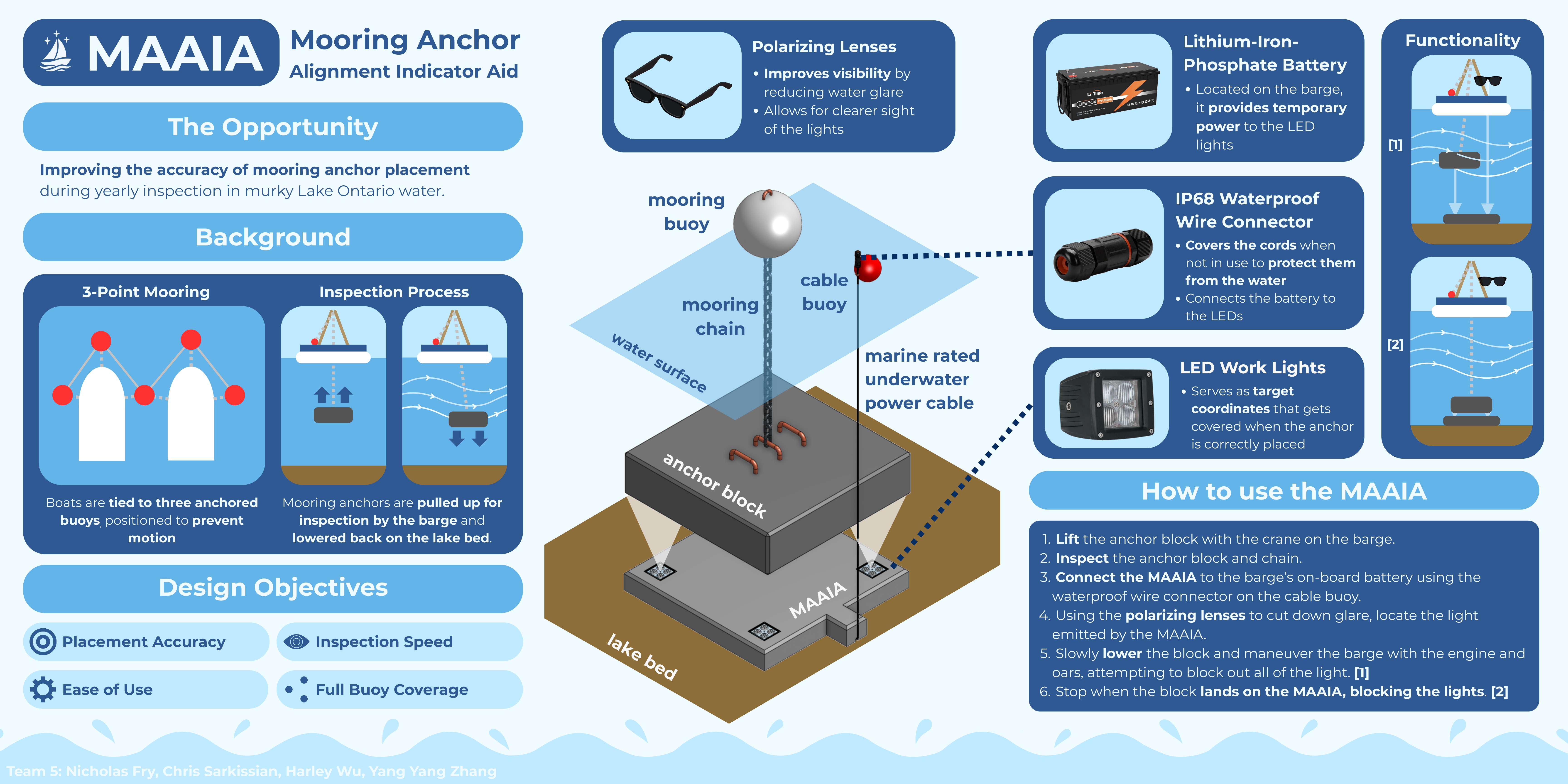
So we designed one. The MAAIA is a device that sits under the anchor block and tells you, visually, when it's back in exactly the right place.
How It Works
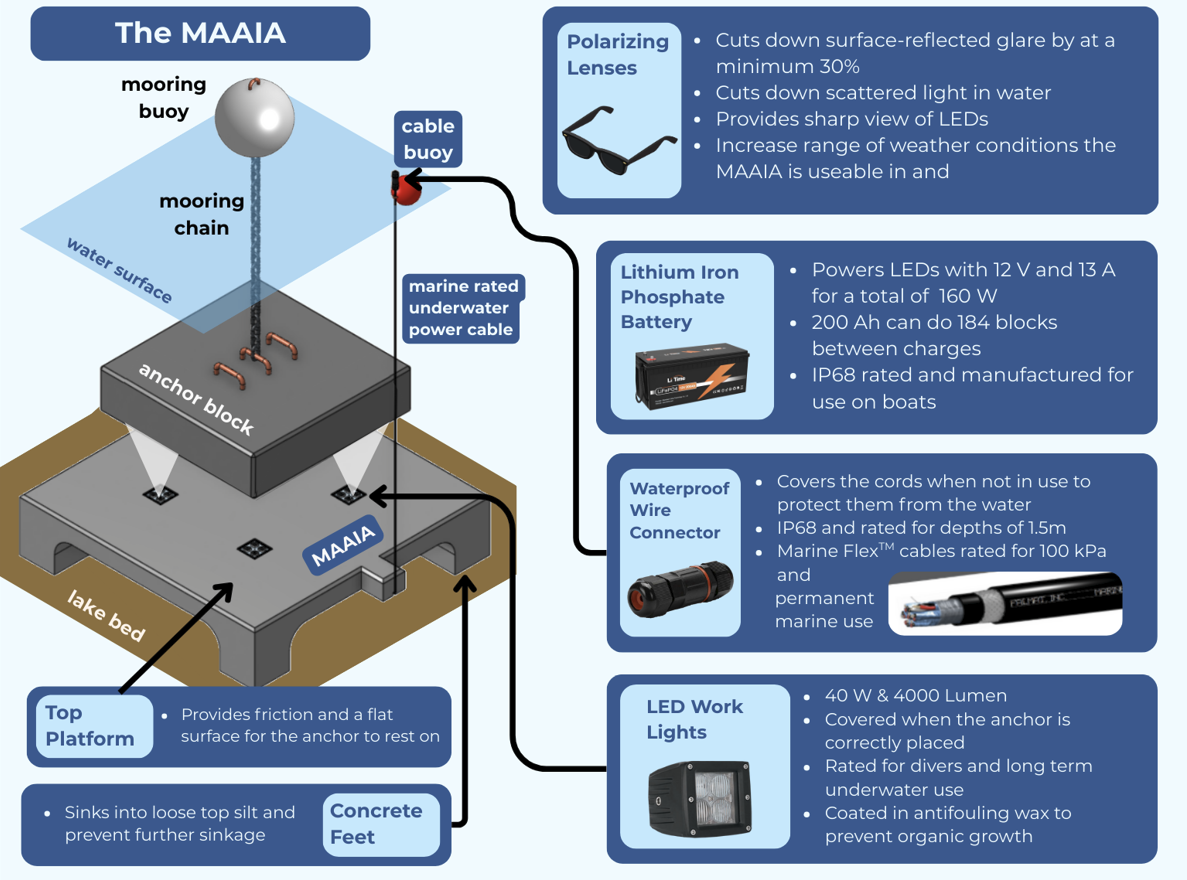
The MAAIA sits on the lake bed beneath the anchor block. It has four LED work lights (40W, 4000 lumens each) powered by an onboard 200Ah lithium iron phosphate battery, enough for 184 blocks between charges. The LEDs are mounted so they're only covered when the anchor block is sitting in exactly the correct position.
Workers on the barge wear polarizing lenses that cut surface glare by at least 30% and reduce scattered light underwater, giving a clear line of sight to the MAAIA's lights. When all four lights go dark, the block is placed correctly.
The device sits on a top platform that provides a flat friction surface for the anchor to rest on, with concrete feet that sink into loose silt to prevent further displacement. All electrical components are IP68-rated, with waterproof wire connectors and Marine Flex cables rated for 100 kPa and permanent marine use. The LEDs are coated in antifouling wax to prevent organic growth over time.
The full mechanical design was built and iterated in Autodesk Fusion 360, and we presented a physical prototype at our Praxis 2 showcase.
Results
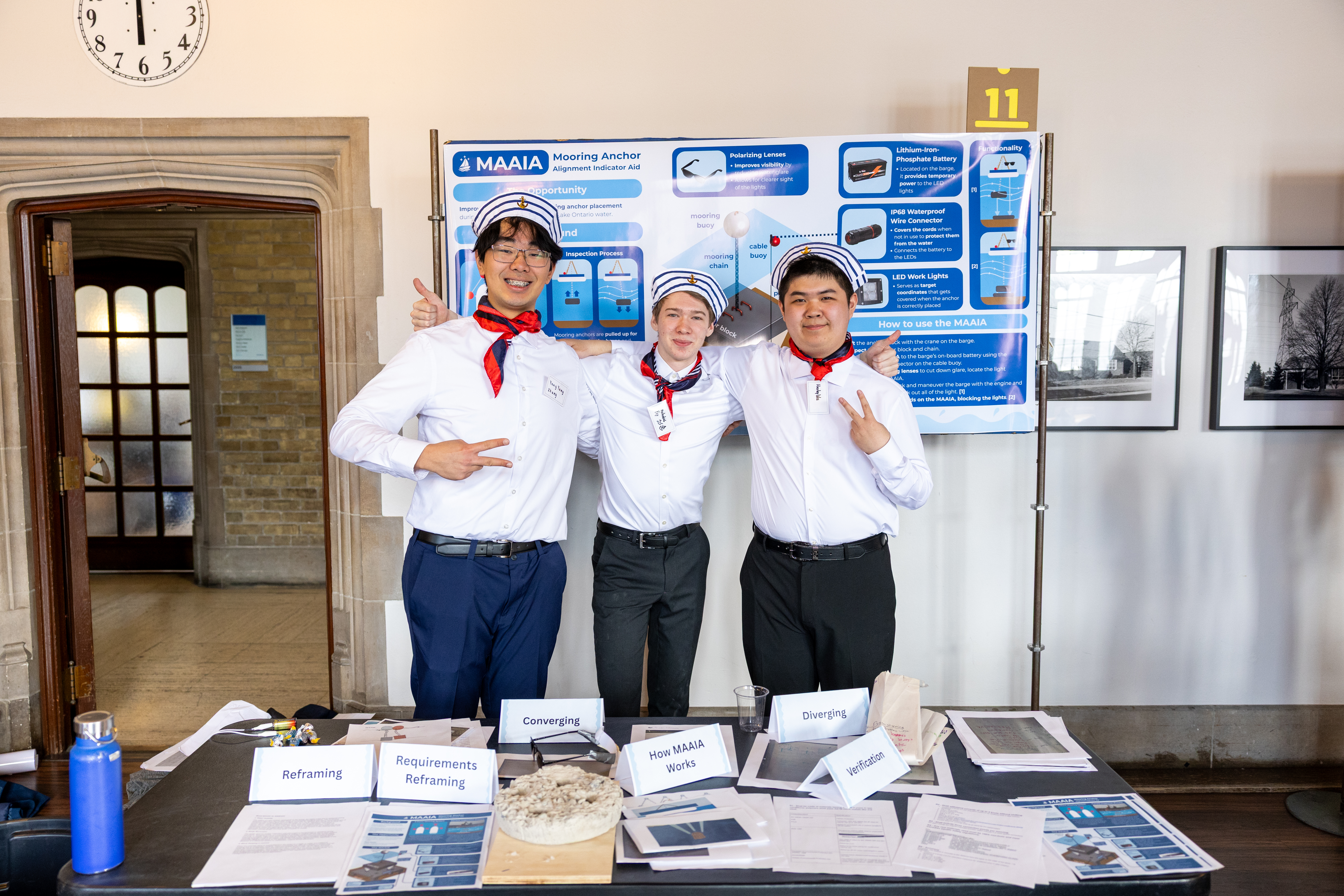
The MAAIA improved anchor placement accuracy by 400% compared to the existing process. We presented our prototype at the Praxis 2 showcase (below).